Difference between revisions of "Main Page"
| Line 31: | Line 31: | ||
<slideshow sequence="random" transition="fade" refresh="7500"> | <slideshow sequence="random" transition="fade" refresh="7500"> | ||
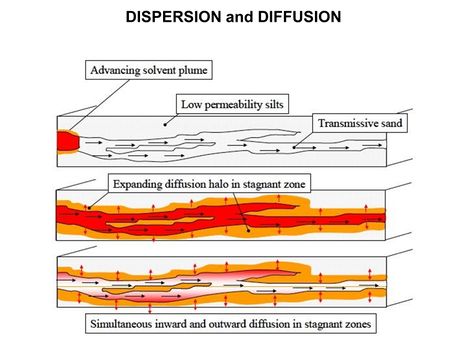
| − | [[File:WH Picture1.JPG|thumb|center|x350px|link= | + | [[File:WH Picture1.JPG|thumb|center|x350px|link=Matrix Diffusion|Molecular diffusion slowly transports solutes into clay-rich, lower permeability zones]] |
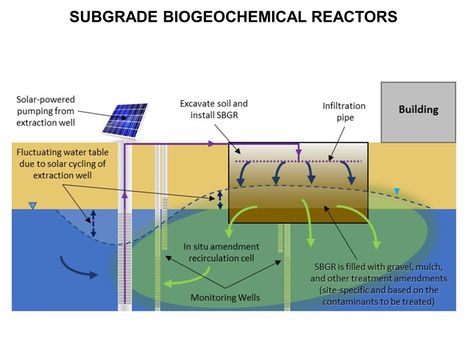
[[File:WH Picture2.JPG|thumb|center|x350px|link=Subgrade Biogeochemical Reactor (SBGR)|Typical subgrade biogeochemical reactor (SBGR) layout. The SBGR is an in situ remediation technology for treatment of contaminated source areas and groundwater plume hot spots<br/>]] | [[File:WH Picture2.JPG|thumb|center|x350px|link=Subgrade Biogeochemical Reactor (SBGR)|Typical subgrade biogeochemical reactor (SBGR) layout. The SBGR is an in situ remediation technology for treatment of contaminated source areas and groundwater plume hot spots<br/>]] | ||
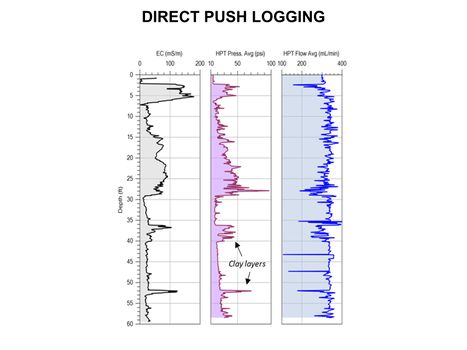
[[File:WH Picture3.JPG|thumb|center|x350px|link=Direct Push Logging|An Hydraulic Profiling Tool (HPT) log with electrical conductivity (EC) on left, injection pressure in middle, and flow rate on the right]] | [[File:WH Picture3.JPG|thumb|center|x350px|link=Direct Push Logging|An Hydraulic Profiling Tool (HPT) log with electrical conductivity (EC) on left, injection pressure in middle, and flow rate on the right]] | ||
Revision as of 17:09, 4 April 2022
Peer Reviewed. Accessible. Written By Experts |
 |
| The goal of ENVIRO Wiki is to make scientific and engineering research results more accessible to environmental professionals, facilitating the permitting, design and implementation of environmental projects. Articles are written and edited by invited experts (see Contributors) to summarize current knowledge for the target audience on an array of topics, with cross-linked references to reports and technical literature. | See Table of Contents |
Featured article: Predicting Species Responses to Climate Change with Population Models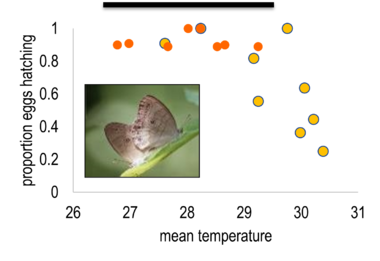 |
Enviro Wiki Highlights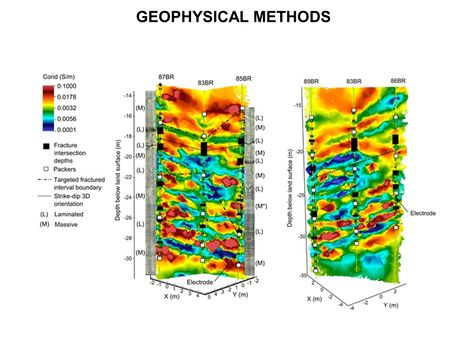 High-resolution 3D cross-borehole electrical imaging of contaminated fractured rock at the former Naval Air Warfare Center in New Jersey. Cross-borehole resistivity tomography imaging is a geophysical technique that can be used for site characterization and monitoring by observing variations in the electrical properties of subsurface materials |